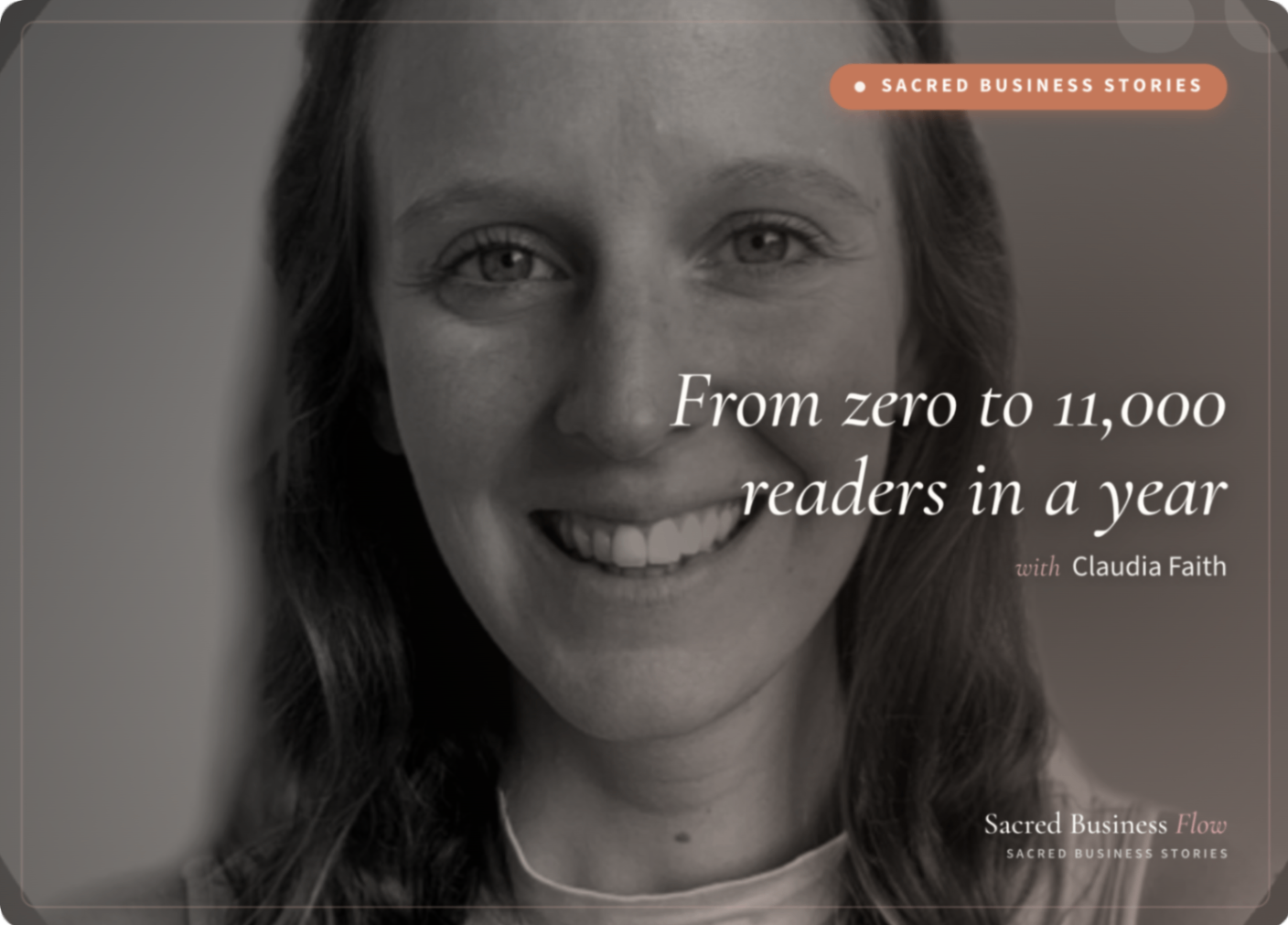
Early last year, Claudia Faith's startup had to slow down and pause. She was the CEO. It was the first company she'd run where she was the one mainly responsible for it.
She'd raised money from VCs. Investors were in. People and influencers were pushing on her from every direction. When investors come in with money, she said, you're no longer just building something. It becomes a different thing.
What she wanted was simple. To make things on her own terms, by herself, because she trusted she could.
The hard part was that she'd always believed this was the thing she wanted. She came from the startup world. She'd built businesses before, raised money, done the pitching. She'd told herself for years that running her own startup as CEO was the goal. Then she got it.
I had to do it to find out that I hate it.
She doesn't like pitching. She doesn't like talking to investors. She doesn't like any of it. The role she'd wanted turned out to be the one she couldn't stand.
Some of her background you can read on her own page. She's from Berlin. She founded companies in health and fintech, worked with more than a thousand clients, coached and consulted on design thinking, and holds a master's in economics and digital health. A classical founder, in her words. The kind with VCs and a board and a pitch always due.
So we had her on Sacred Business Stories to trace how she got from there to here. The part most people don't hear is what she found when the startup paused.
The most fun she ever had in that whole stretch wasn't the pitching or the scaling. It was writing the investor updates. Every couple of weeks she'd write her group of investors a note about what the team had been doing. She'd reach for emojis. She'd try to make it fun for people who already get too many emails. It was the one part of the job that let her be creative.
My favorite part of my startup investor journey was actually writing those investment email updates.
So when the startup paused, she followed that thread. She tried Medium first, something that had been on her mind for seven years. It wasn't for her, and she left two months in. Then she found Substack in May of last year, and for the first three months she wrote mostly for herself.
She jumped around. She was traveling Europe in a camper van, so she wrote about that, and it started to feel like a chore. She wrote about design thinking and designing your life, which she'd spent a year studying at university and still cares about. That didn't stick either. There was no thread connecting camper vans to design thinking to writing, and she could feel it.
Then she started writing about the thing she was actually doing. How she writes online. What was working, what wasn't, how she grew. That's what people connected with. Within about a year she'd built more than 11,000 readers and was earning over $5,000 a month.
Two moments from the conversation stayed with us.
The first was about perfectionism.
Your first 10 posts will probably not be seen by a lot of people. So let it be messy.
She's not a perfectionist, and she's built her whole approach around not waiting. She builds in public. She asks for feedback. She puts the rough version out and changes it later. Her phrase for it comes from design thinking: trust the process. The point she keeps making, to new writers and to herself, is that you can't get useful feedback on something you never publish. The messy version in the world beats the perfect version in your head.
The second was about being seen.
Let people know that you're not AI, you're not a robot, you're you.
She means video. Live sessions. The thing a lot of writers on Substack dread, because they didn't come from TikTok or Instagram where you're on camera all day. Her case for it is plain. People connect with a face and a voice in a way they don't with text alone. And the more the internet fills with generated writing, the more that proof of a real person matters.
Her advice to anyone frozen at the start is short. Be yourself, share the ups and the downs, and find your people before you try to grow.
The shift in Claudia's story is worth naming. The startup world told her success looked like one thing. Investors, pitching, scaling, the CEO title. She chased it, got all of it, and found the one part she loved was the small task most founders treat as admin, the update email nobody else wanted to write.
The thing she actually wanted wasn't on the other side of the startup. It was hiding inside it. She just had to quit the rest to see it.
You can find Claudia writing at Wander Wealth on Substack.
She speaks mostly to writers. Often the quieter, more introverted kind, new to Substack and overwhelmed by it. If that's you, she's a good person to follow.
Check out the full replay. She's generous with what actually worked.