7 Best Alternatives to Scarcity Marketing
A countdown timer can lift your sales. It can also lift your heart rate, tighten your chest, and leave you feeling like you sold against your own values. That's why the best alternatives to scarcity marketing matter so much, especially when your work runs on trust. If you coach, do therapy, heal, or guide, the way you sell becomes part of what you're selling. People feel it before they ever buy.
Scarcity works by pushing the nervous system. It builds pressure, then hands you relief through a fast decision. That can produce action. Action isn't the same as readiness. And if your people have already lived through a few manipulative launches, pressure doesn't make them feel safe. It makes them step back, even when they want the help.
So if you've decided you're done using false urgency, fake limited spots, and deadline pressure as your main engine, you need something to take over the job scarcity was doing. Not nicer words over the same move. An actual mechanism that helps people decide.
What the best alternatives to scarcity marketing actually do
Scarcity usually solves three problems at once. It gets people to pay attention. It gets them to decide. And it saves you from an offer that stays open forever and drifts for months. Pull scarcity out without covering those three jobs, and your whole sales process goes vague.
Which is why the best alternatives to scarcity marketing aren't passive. They still make things clear and still help people move. They just do it without backing anyone into a corner.
A good replacement does at least one of these things: it makes the offer easier to understand, it lowers the risk of saying yes, it shows why now makes sense without pretending it's the last chance on earth, or it gives people enough contact with your work that trust has time to form. That's the real job.
1. Use specificity instead of urgency
A lot of hesitation isn't resistance. It's confusion. People don't know what they're actually buying, what happens after they pay, or whether the thing fits the problem they're sitting with on a Tuesday afternoon.
Specificity helps because it lowers the mental load. If your sales page says you help people get unstuck, that could mean almost anything. If it says you help experienced practitioners turn scattered referrals into a steady stream of client conversations, that lands somewhere. Someone can place themselves inside it.
And get specific about the process, not just who it's for. Say what the first session is actually for, what support looks like between calls, who it works best for and who should skip it. The clearer the edges, the less you reach for pressure.
2. Replace countdowns with decision windows
There's nothing wrong with structure. What hurts trust is pressure you manufactured.
A decision window isn't a countdown stunt. You can say enrollment is open until Friday, because you start Monday and you want time to bring everyone in well. That's a real reason. It's tied to delivery, to capacity, to care.
It works because it gives the offer a shape without pretending the sky falls at midnight. It also keeps you steady as the seller. You're not pacing the kitchen at 11pm trying to force urgency into your copy. You're naming the timeline the work actually needs.
But it only holds if the reason is true. People can feel the difference between a deadline that comes from how you deliver and one that got pasted on later because somebody said it converts.
3. Teach enough that trust can form
Some people need to feel how you think before they can buy. Not because they want free content forever. Because your work is relational. They're not buying a lamp. They're buying a change in how they live, work, or show up.
Teaching builds trust when it carries the mechanism. So you don't just say consistency matters. You explain why someone can know exactly what to do and still not do it. You talk about the gap between the strategy and the nervous system that has to carry it out. This is the seam Carolina and I work on either side of. I hold the structure, she works with the body, and most stuck practitioners are stalled right where the two meet. Show that pattern in plain words, and the reader can feel whether you understand the real problem.
That kind of content pre-sells without cornering. It helps the right people recognize themselves. And it lets the wrong people opt out early, which is good for everyone.
4. Use resonance, not persuasion, as the filter
A lot of sales copy tries to beat objections by pushing harder. With thoughtful, skilled people, that usually backfires. If someone has been sold to with pressure before, more persuasion just reads as static.
Resonance works another way. You name the pattern cleanly and let the person hold it up against their own life. Maybe they rewrite their offer every three months. The ideas aren't the problem. Being visible brings up exposure, and exposure pulls on an older threat. That's a different conversation than "you just need more discipline."
When someone feels accurately seen, they don't need much pushing. Their own knowing comes back online. That makes for cleaner yeses. Sometimes it makes for a clear no, and respecting that no is part of why this keeps working over years.
5. Make the path to purchase simpler
Sometimes scarcity is covering for a clunky offer. If people have to sort through six packages, murky pricing, and fuzzy outcomes, they stall. Then the seller bolts on urgency to force a decision through the fog.
A better fix is to simplify.
If you have one main way to work together, say that plainly. If there are two, explain who each one is for. If the pricing has options, make the difference obvious. You're not trying to strip out choice. You're trying to clear the friction that has nothing to do with the decision.
Think of wiping the counter before you cook. You're not changing the meal. You're just making it easier to start.
6. Let social proof be real and slightly unfinished
Polished testimonials sound like ads, and your audience knows it. What builds trust is something more ordinary, and a little less finished.
A useful testimonial sounds like a real person talking. It says what they were struggling with, what shifted, and what was still in motion. Maybe they didn't become a brand new person overnight. Maybe they stopped ghosting their own marketing for the first time in a year. Maybe they finally sent the proposal they'd been avoiding for months.
That kind of proof works because it gives the buyer a believable bridge instead of a fantasy. They can see where your work might meet their actual life, the one with school pickup, client notes, and a nervous system that doesn't love being rushed.
7. Build continuity so every sale doesn't carry all the weight
Scarcity gets loud when the business under it is shaky. If you only sell during big launches, every launch starts to feel loaded. Then the pull to push gets stronger, because too much is riding on one short window.
Continuity changes that. It might be regular content, ongoing conversations, a steady referral system, or a simple sequence that keeps people connected to your work between launches. This is part of what Carolina and I care about most at Sacred Business Flow. Not just how to make a sale, but how to build something that doesn't run on adrenaline.
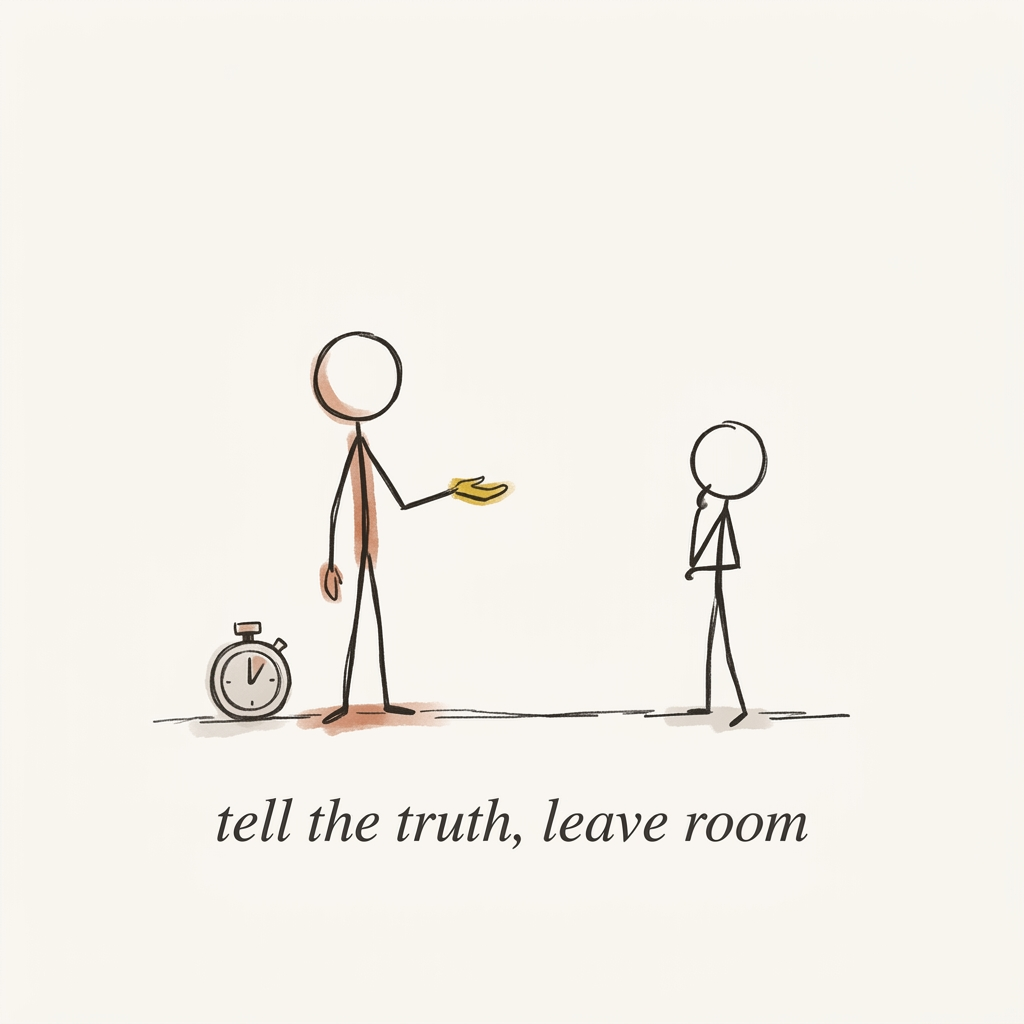
Because when demand is steadier, you don't need every maybe to turn into a yes by Friday. You can tell the truth. You can leave room. You can play the long game, because you actually built one.
When scarcity is not the problem
It's worth saying plainly. Not every limit is manipulation.
If you can take only four private clients because that's the real capacity you have, that's not a trick. If a live program starts on a set date, that's not coercion. Reality has edges, and naming them helps people decide.
The question is where the limit comes from. The truth of the offer, or the fear that nobody buys unless they're squeezed. Those two feel different when you write them, and they feel different when someone reads them.
Choosing the right alternative for your business
It comes down to what you've been using scarcity to solve.
If your audience is confused, lead with specificity. If they're cautious, teach more and show the mechanism. If your offer drifts, use a clean decision window. If sales feel heavy because everything rides on launches, build continuity.
And if urgency is tempting because you're scared, that's worth noticing too. Not to judge it. Just to read it. Often the tactic is sitting on top of a nervous system that needs tending, and no copy trick will solve that for you.
You don't need to pressure good people into the right yes. You need a business that can hold clear offers, real timelines, and honest trust. That usually grows slower than hype. It tends to still be standing when the noise dies down.
Phil (& Carolina)