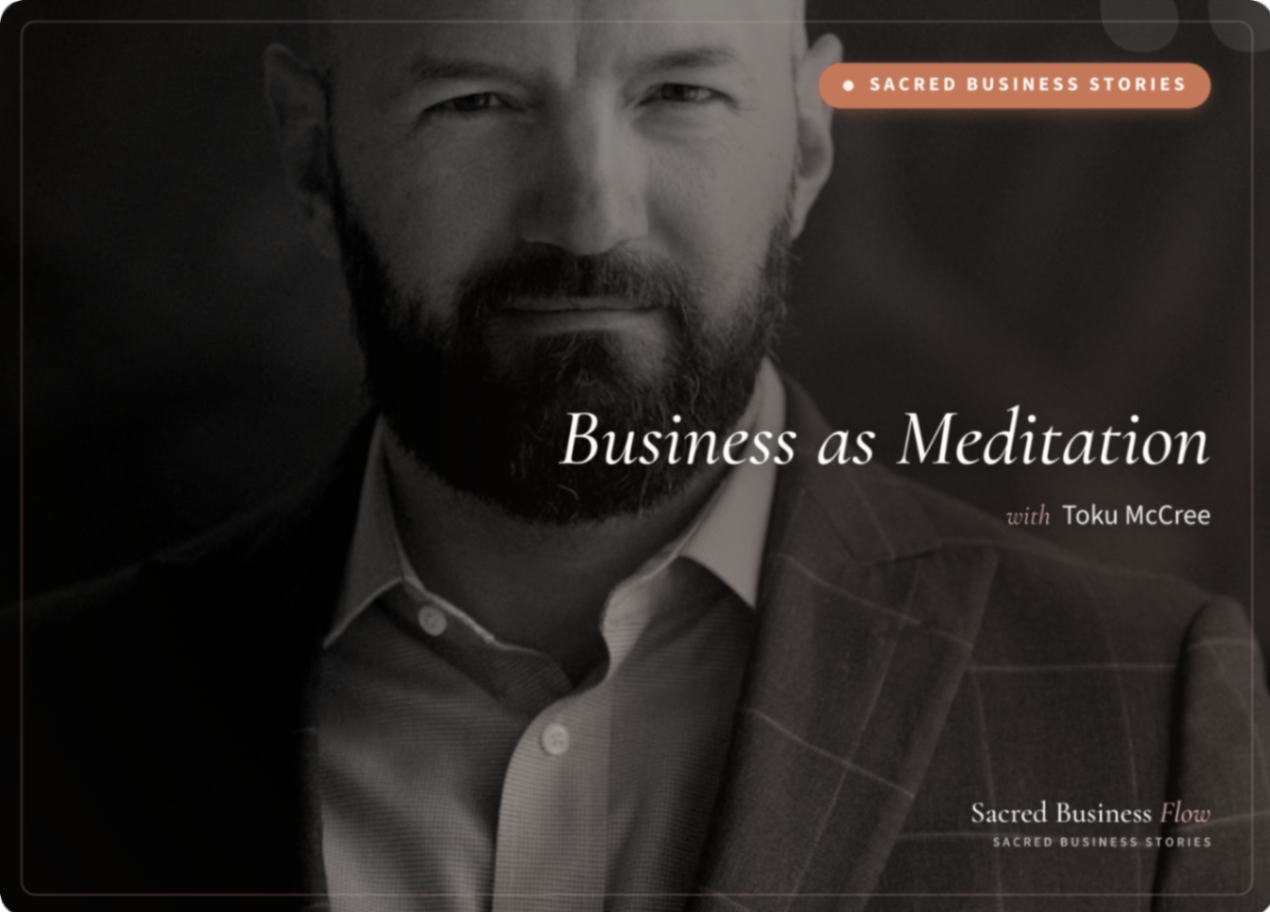
Toku McCree was twenty-seven when he walked into a Zen monastery. He told himself he would stay a month. Worst case, he figured, it would make a good story.
He stayed two and a half years. They woke up at four in the morning. They meditated four hours a day. One week out of every month, eight to twelve hours.
What he wanted, when he walked in, was an answer to a question he had been asking since he was a kid. What am I supposed to do with my life?
By that point he had already tried thirty different jobs before turning thirty. He had a career in the music business and walked away from it at twenty-seven. Teachers had been telling him he had a lot of potential since he was small, but nobody had ever told him what to do with it. So he kept trying things, hoping one of them would feel like the answer.
The monastery didn't hand him one. It handed him something more useful.
The best purposes are actually questions.
Sitting on a meditation retreat, what arrived for him wasn't a job description. It was a reframe. Instead of "my purpose is to serve those walking the path of awakening in a deep and fundamental way," the live, working version turned into a question. How do I serve those walking the path of awakening in a deep and fundamental way?
What changed, in that small shift, was everything that came next. Toku tried being a preschool teacher. He worked on political campaigns. He was a personal trainer who slipped mindfulness into his sessions. Eventually he ended up where he is now, coaching executives and business owners who think they're hiring him to fix their leadership.
Secretly I'm just tricking them into being more wise and compassionate.
He calls himself a sacred trickster.
So we had him on Sacred Business Stories this week to walk through how a guy who spent four hours a day on a meditation cushion ended up running a coaching practice he can sell hard, a course called Coaching Beyond Yes or No, and a tarot deck he is building by hand in Canva. The part most people don't expect is how directly the monastery taught him to do business.
The lesson he kept circling back to was this. In meditation, the results vary. Some days the Buddhas fall out of the sky and milk and honey rain on your body. Some days your back hurts and you're counting the minutes. If you sit down hoping for a specific outcome, you quit fast. If you sit down committed to the practice, you build something the variable results can't touch.
His business runs on the same logic. He shows up. He talks to people. He invites them into conversations. Sometimes a great session lands a client. Sometimes a session he thought he butchered lands a client and a great session goes nowhere. He stopped trying to control which way it broke and started showing up the next day again.
Two things stood out from the conversation.
The first was the framework he uses for sales. He calls it the hunter and the monk.
The monk is always in front. The monk's in charge of what's happening. But that part that's back there is like, how can I get this guy to buy this used car? He's there too. And he's a great part of myself. He just can't be the main person in charge.
This matters because most coaches and consultants spend years trying to kill the hunter inside themselves. They worry that wanting to sign a client is somehow dirty. So they overcorrect into a vague, passive presence that comes across as not caring. Toku's frame is the cleaner one. The strategic part of you is allowed to exist. It just needs to be filtered through the wiser part.
The second was the way he reframes what a sales conversation actually is.
What I am selling my clients is their commitment to their own future. That's what they're buying.
His analogy was the mountain guide. The client picks the mountain. The client decides they want to milk a yak on it. The guide's only job is to ask whether having someone there with them would help. That move, sitting next to the person rather than across from them, is the whole thing. He says he has set up coaching engagements where he has no idea how he is going to help. He doesn't have to believe he can do it. He just has to believe the client can.
The advice line that came near the end was the one most coaches need to hear, and few of them say out loud.
Money is the most powerful standard for commitment that we have.
He told the story of hiring a coach for sixty thousand dollars a year. He showed up to every call on time. He flew to Los Angeles once. He treated the engagement like gold because of what it had cost him. Then he mentioned the five-dollar-a-month subscriptions he forgets exist. The number isn't a perfect signal, but it's directionally honest. When the commitment is high enough, the reverence shows up.
The reframe underneath all of it is the one worth taking with you.
Toku didn't come back from the monastery with a purpose statement. He came back with a question that keeps asking itself. The business that grew up around the question is a manifestation of it, not the point of it. He brings the same energy to a dinner party in Mexico City, where he asks for someone's number and invites them to coffee that week instead of hoping he'll run into them again. He brings it to the tarot deck he's making by hand, twenty Canva elements per card, knowing he isn't going to become a tarot card millionaire and doing it anyway because the days that start with art are the ones that feel alive.
The version of business most people are taught is a race. Toku's version is a sit. You show up the next day. The results vary. You keep going.
You can find Toku on Substack at Unconventional Wisdom, and at executive.com and coachingmba.co.
He works mostly with coaches, executives, and founders who feel called to do meaningful work and are tired of acting like the wanting-to-make-money part of them is the enemy.
Check out the full replay. He doesn't waste the hour.