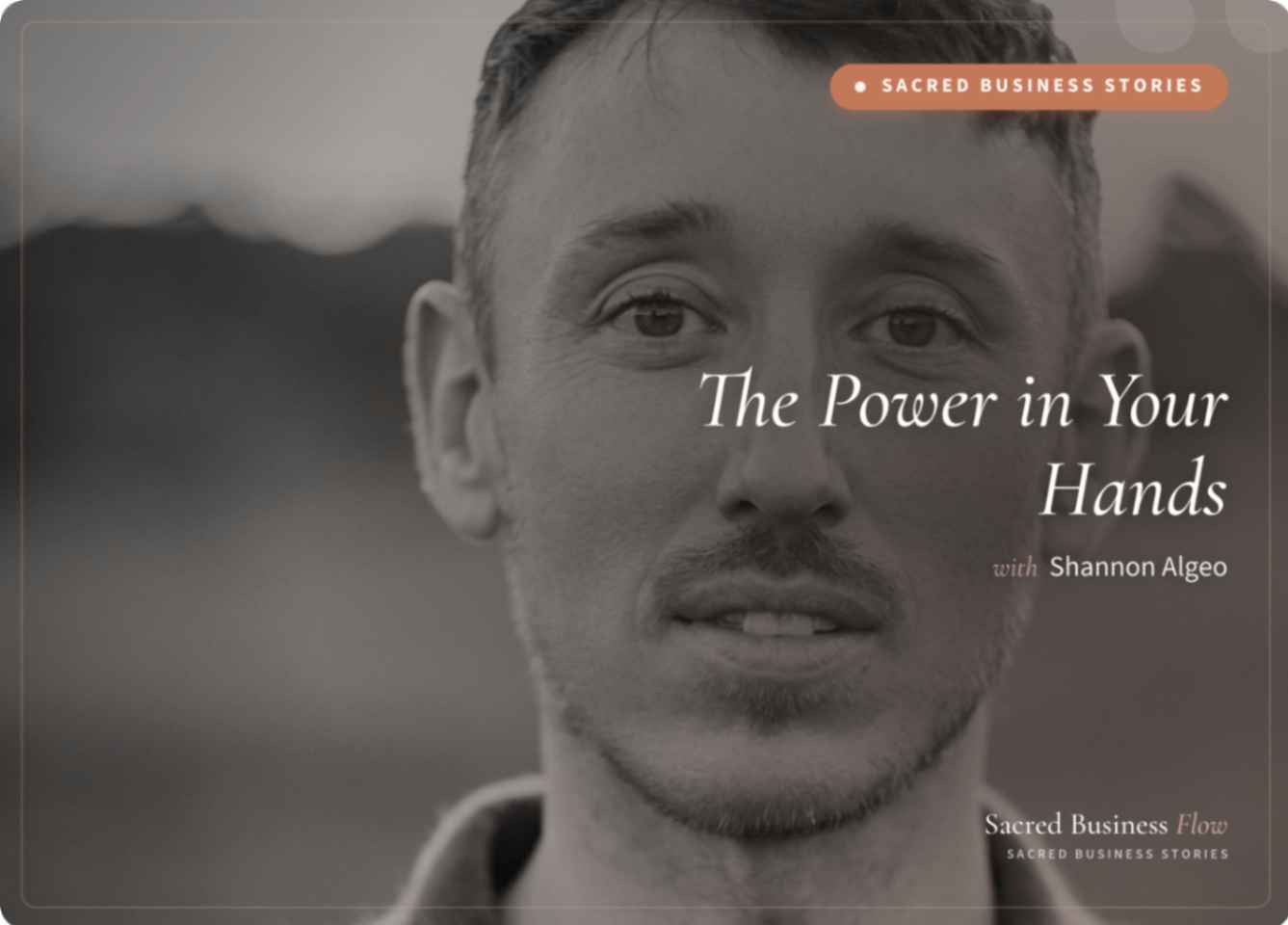
Shannon Algeo had already done the hard part. He'd published his research, written his thesis, and turned years of study into a treatment plan for our relationship with technology. Then a friend told him he had to try Claude as a writing partner, so he opened it and fed it his question and his plan.
It handed back chapter titles. Mini chapter descriptions. Catchy ones.
And reading through them, he felt something go hollow. Are these my ideas? Is it mirroring back what I fed it, or is it writing the book for me?
That question is where it turned. He'd spent years earning the right to write this book, and now a machine was offering to do the one part he most wanted to do himself.
No effing way. The buck stops here.
He drew his line in the sand and wrote the book by hand. In the opening pages he tells the reader plainly that it was written by him, without AI. He used it to track down citations he already knew existed, and that was all. Not to write, not for feedback on the writing.
Some of Shannon's story you may already know. More than fifteen years teaching yoga and meditation, a long-running podcast called SoulFeed, co-founding We Human, an earlier book called Trust Your Truth. The new one, The Power in Your Hands: Liberate Yourself from Attachment to Technology, came out June 2nd. He's a psychotherapist and a poet, based in Ojai, and he narrated the audiobook himself.
So we had him on Sacred Business Stories this week, and the conversation kept returning to the machine most of us now keep in a pocket.
Shannon's read on what a large language model actually is landed hard. He calls what it produces high-quality appearing slop. It could say anything, and it says it in a convincing way. He points to Zachary Stein, the psychologist behind the AI Psychological Harms Research Coalition, who describes a shift from the attention economy to the attachment economy. Social media went after our attention. AI, in that framing, goes after our attachment, the part of us that reaches outside itself to feel seen and safe.
Which is the whole thesis of his book worn down to a sentence. He leans on a definition of addiction from Nikki Myers, the founder of the yoga of 12-step recovery.
Anytime I reach outside of myself for something that can only be sourced from the inside, I risk forming an addictive relationship with whatever that thing is.
Read that again with a chat window open.
Two moments stood out.
The first landed close to home, because we'd lived it that same week. A couple of mornings before we recorded, one of our clients sat at the end of a long day and asked Claude whether he could make a real living doing his work. It told him no. Not much money in it, hard field. By morning he was talking about a different plan. We opened a fresh window in a different tool, asked warmly, and got an easy yes. Same work, same week, two machines, two answers. I wrote about that one on its own earlier in the week.
Shannon's read on it was the sharpest thing he said all hour.
We are looking outside of ourselves to a higher power-like figure to see us, to soothe us, to make us feel safe.
The machine gets things wrong, sure. The deeper problem is the authority we hand it, to decide who we are and what we're allowed to want. The answer was never in the box. It was in the client, who had already been shown by his own results that the work was his.
The second was about what lets a person take feedback without being erased by it.
Having ego strength allows me to receive feedback and test it against my own inner knowing.
Shannon isn't anti-feedback, and he isn't anti-technology. He was on a video call the whole hour, using the tool well. His argument is narrower and harder. Ask what a given tool amplifies in you, and whether you're using it or being used by it.
His own answer is friction. He keeps his iPhone off, in a box, all day, and carries a Light Phone with no apps and no internet. Not because everyone should, but because the apps were built by behavioral psychologists to be frictionless, and the only counterweight is friction you build back in on purpose.
The advice underneath all of it is one line.
We should do whatever we're doing with a reason and with intention.
Shannon's story reframes a belief that shows up all over creative work. The idea that the answer about whether your work is worth doing lives somewhere outside you, in an expert or a machine that sounds sure. He wrote a book called The Power in Your Hands and then refused to let anything else hold the pen. The satisfaction of having made the thing himself was the point, and he wasn't going to hand it over.
If you've been letting a screen tell you whether your work is worth doing, his hour is a good place to start putting the pen back in your own hand.
You can find Shannon at shannonalgeo.com and writing at The Sacred Ebb on Substack.
Check out the full replay. He doesn't waste the hour.